

The hunt, p.1
The Hunt, page 1
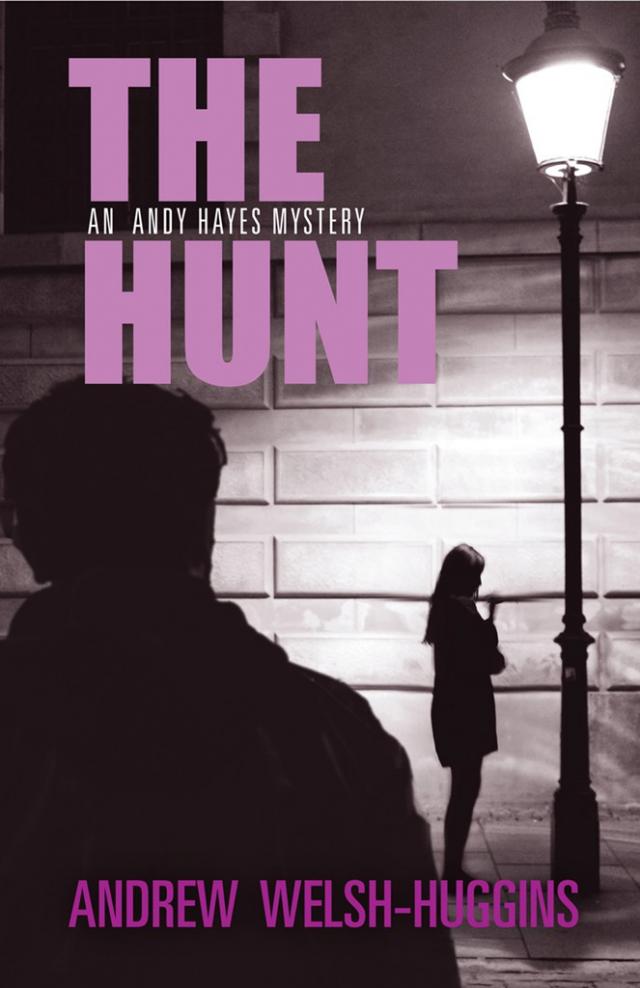


THE HUNT
ANDY HAYES MYSTERIES
by Andrew Welsh-Huggins
Fourth Down and Out
Slow Burn
Capitol Punishment
The Hunt
The Third Brother (forthcoming)
THE HUNT
AN ANDY HAYES MYSTERY
ANDREW WELSH-HUGGINS
SWALLOW PRESS
OHIO UNIVERSITY PRESS
ATHENS
Swallow Press
An imprint of Ohio University Press, Athens, Ohio 45701
ohioswallow.com
© 2017 by Andrew Welsh-Huggins
All rights reserved
This is a work of fiction. The resemblance of any characters to real persons, living or dead, is purely coincidental.
To obtain permission to quote, reprint, or otherwise reproduce or distribute material from Swallow Press / Ohio University Press publications, please contact our rights and permissions department at (740) 593-1154 or (740) 593-4536 (fax).
Printed in the United States of America
Swallow Press / Ohio University Press books are printed on acid-free paper ™
27 26 25 24 23 22 21 20 19 18 17 5 4 3 2 1
Library of Congress Cataloging-in-Publication Data
Names: Welsh-Huggins, Andrew, author.
Title: The hunt : an Andy Hayes mystery / Andrew Welsh-Huggins.
Description: Athens, Ohio : Swallow Press, an imprint of Ohio University Press, [2017] | Series: Andy Hayes mysteries
Identifiers: LCCN 2017000575| ISBN 9780804011884 (hardback) | ISBN 9780804040815 (pdf)
Subjects: LCSH: Private investigators—Fiction. | Murder—Investigation—Fiction. | Columbus (Ohio)—Fiction. | BISAC: FICTION / Mystery & Detective / General. | GSAFD: Mystery fiction.
Classification: LCC PS3623.E4824 H86 2017 | DDC 813 /.6—dc23
LC record available at https://lccn.loc.gov/2017000575
For Sarah, Emma, and Thomas
It is a very human foolishness to insist on the presence of a knife or a gun or a fist in order to recognize the existence of force, when often the most compelling forces on this earth present intangibly, in coercive situations.
—Rachel Moran, Paid For: My Journey through Prostitution
It is a terrible thing, this kindness that human beings do not lose. Terrible, because when we are finally naked in the dark and cold, it is all we have. We who are so rich, so full of strength, we end up with that small change. We have nothing else to give.
—Ursula K. LeGuin, The Left Hand of Darkness
So I pressed and the lustrous goddess answered me in turn: “Royal son of Laertes, Odysseus, old campaigner, stay on no more in my house against your will. But first another journey calls. . . .”
—Homer, The Odyssey, Book X, Robert Fagles translation
Contents
Prologue
1
2
3
4
5
6
7
8
9
10
11
12
13
14
15
16
17
18
19
20
21
22
23
24
25
26
27
28
29
30
31
32
33
34
35
36
37
38
39
40
41
42
43
44
45
46
47
48
49
50
51
52
53
54
Acknowledgments
Prologue
Through the door, we heard a woman scream.
I stood up from where I’d fallen and used my flashlight to reveal a set of descending stairs leading to a second, open doorway. I brushed the heavily falling snow off my face and walked down a couple of steps before pausing. I yelled her name, but the sound was immediately muffled by the storm, like someone pushing a pillow over my head.
I took a few more steps down the stairs. I hesitated again. Despite how far we’d come, how close we were to ending the hunt, I didn’t want to go through that door. Not yet. The man on the other side had a gun and nothing to lose. All bets were off. One decent shot at us and everything we’d worked for was over. I’d already walked straight into one trap this Christmas season. Why repeat history, with the bruises from that mistake still healing?
“Let’s go,” Theresa hissed, behind me.
“Wait.”
Focus, Andy. Focus.
Why repeat history, but why bank on second chances either? I’d already used up enough for a lifetime. Why gamble on somebody else’s life?
Focus . . .
“We don’t have time,” Theresa said.
“Hold on,” I said, listening.
“He’s going to get—”
She screamed again.
“Now,” I said, charging down the stairs and through the door.
1
I WAS HAVING ONE OF THOSE DECEMBERS. Which seemed to happen to me more and more these days.
I sat up straight, trying to ease my aching back, which hurt because of course I’d forgotten to bring stadium seats. It was a couple of weeks earlier, with not that many shopping days left before Christmas. I took a long pull on my beer to compensate, which would have made for a satisfying moment except for the conversation I was having on the phone just then with my ex-wife. I glanced over at Anne and she frowned back, but not in the way that communicates your girlfriend’s concern for your well-being. In a way that suggests she’s wondering what the hell she and her daughter have been dragged into and is really starting to resent it.
“Stop shouting,” my ex-wife said.
“I’m not shouting. It’s just that it’s loud in here.”
“Where’s here?”
“I’m at a roller derby match.”
“You’ve got to be kidding me.”
“Listen—I told you I’d talk to him.”
She’d called about our son, Mike. And it hadn’t been to discuss which wrapping paper to use this year.
“But when?” Kym demanded. “You said that last week. And the week before. And then when you went to the hockey game Mike said you spent most of it on the phone and when you weren’t on the phone you were complaining about the jumbotron.”
“Jumbotrons ruin the experience. People don’t watch the actual game anymore—”
“Nobody gives a shit about jumbotrons, Andy. They care about grades. And success that comes from good grades. And right now your son has neither because he’s failing three classes. All he cares about is sports. Like his father. Which is pretty damned ironic. Which is why you need to talk to him.”
“I got that part, believe it or not. I’ll speak to him tomorrow afternoon.”
“No, you won’t,” she said angrily. “You aren’t coming tomorrow because you were supposed to come last week and you forgot and tomorrow he’s going to the movies with his friends. Which puts us at Wednesday, and who knows whether that’s too late at this point. What is it with you and remembering shit?”
“I didn’t forget,” I snapped. I knew it was pointless to explain why I’d missed last week’s custody visit. To point out that I’d been offered a last-minute job doing backstage security for a second-tier boy band that unexpectedly sold out an Arena District club. A club whose owners were nervous about the liability posed by a thousand drunken twenty-somethings hoping to relive the band’s glory days from a decade earlier when the now not-so-young squires could actually sing. When the club manager offered me five hundred dollars and I told him to double it or get lost and he accepted, I knew I had no choice. Because I had no money, as usual. I’d told Kym I couldn’t make it, but she said she never got the voice mail.
At least I was pretty sure I’d told her.
“Wednesday, then,” I said. “Promise.”
“Don’t screw this up, Andy. If he has to repeat a grade, it’s on you.”
“I said I’d be there—”
“Heard it before,” she said, and hung up.
“Everything OK?” Anne said, frowning as I pocketed my phone and fumed over the retorts caught in my throat. Which is where they needed to stay, since my ex-wife’s complaints weren’t misplaced. My first ex-wife. I hadn’t heard from my second so far today. But it was barely 6 p.m. Plenty of time.
“Peachy. Fine and dandy.”
“Great,” she said. “So, I don’t know how much longer I can stay. My back is killing me.”
“Stadium seats. Yes, I know.”
Roller derby is not usually a winter sport. The flat-track season starts around March and ends late in the summer. You go a little longer if you make the championships. But this year was different. Columbus’s team, the Arch City Roller Girls, had arranged an exhibition bout against their Ann Arbor counterparts, the Tree Town Skirts, on the Saturday after Thanksgiving. The two teams from the college football rival cities were pairing off against each other in a promotion they billed as “Helliday on Wheels.” It was both a fund-raiser and a chance to recruit new players, dubbed “fresh meat.” The T-shirts and ball caps and coffee mugs at the concession stand all said †œMerry Crunchmas.”
It had seemed like a good idea at the time. Round up some friends, go see Bonnie skate. Have a couple beers, eat a couple burritos. Make an outing of it. That was before I forgot the stadium seats and Kym called to ask what I was doing about our son and his failing grades. Which was a good question. One I didn’t have an answer to at that moment. Or maybe any other time.
Bonnie—Bonnie Deckard—does what I call part-time IT consulting for me because she refuses to be labeled a hacker. In her spare time she plays roller derby, where she skates as a blocker, which is roughly the equivalent of a defensive lineman in football, although they can also be on offense. She goes by the derby name “Bonshell.” Her job is helping a player called a jammer break through a scrum of opponents and score points by passing skaters from the other team. The blockers also try to stop the opposing jammer, which was what Bonnie and her teammates were successfully doing at the moment. Ignoring the looks Anne was shooting at me, I clapped and joined the shouts of approval rising up around me in the circular Ohio Building at the State Fairgrounds.
The referee blew her whistle, signaling a foul by one of the Tree Town Skirts. Boos filled the arena. At the break in the action, Lucy, sitting one bleacher below me, pushed her cat’s-eye glasses down her nose, leaned over, and whispered something to Roy. He shushed her.
“What?” I said.
“Nothing,” Roy said.
“C’mon.”
Lowering his voice, Roy said, “She said you and I must be in rear-end heaven, with all that Lycra out there.”
“Watch what you say,” I said, looking around. The stands were crowded with players’ parents, younger siblings, friends, and boyfriends, including Troy, Bonnie’s own beau, sitting next to me. If he’d heard Roy, he was ignoring him.
“Do you deny it?” Lucy said, mischief in her eyes.
“Yes,” Anne said, glancing at her daughter, Amelia, before glaring at me. “Do you?”
“Pleading the Fifth,” I said, and took another pull on my Bud Light.
“Crap,” Roy said.
“Nothing of the sort, parson,” I said. “It’s my constitutional right.”
“Not that. This.” He held up his phone, which showed an incoming call. Roy’s phone rings a lot, which I guess happens when you’re a minister. He was mostly immune to the demands on his attention. But I knew Lucy, his long-suffering wife, wouldn’t have minded an hour off now and then. Roy listened, putting a finger in his ear to drown out the crowd and the announcer’s play-by-play, before getting up and making his way down the stands and over to an exit door. I settled back and watched the match resume, trying to placate Anne. It wasn’t easy. Mike wasn’t the only person I’d let down recently. I’d missed a long-planned date night with Anne the evening before while staking out two married Ohio State medical school professors meeting up at a Hilton out east. The catch being they weren’t married to each other. Like I said, I needed the money. When my efforts to make peace with Anne failed, I turned my attention to the track and tried to focus on the action and not on Lucy’s quip. Rear-end heaven. Once again, it wasn’t easy.
A couple of minutes later Roy walked back inside and signaled me. Suppressing a sigh of gratitude, I hoisted myself off the bleacher and joined him on the floor.
“What’s up?”
“What’s up is you may need a divorce lawyer, to judge by the way Anne’s looking at you right now.”
“Excepting the fact we’re not married, tell me something I don’t already know.”
“As if I’ve got all day. Listen. Guy I think you should talk to,” he said, gesturing at the phone.
“What guy?”
“Guy might have a job for you.”
“A job?”
“That’s what he said.”
“But he called you.”
“And I’m suggesting you talk to him. You’re what, drowning in work?”
I thought about the boy band, about the four or five notes they’d actually hit. “What kind of job?”
“Here,” he said, handing me the phone. “I’m going back up. I don’t want to miss any Lycra.”
“Buy me another beer?” I said to his back.
“I don’t buy swill,” he replied.
2
I WALKED TO THE EXIT AND STEPPED OUTSIDE. I didn’t need my coat. It was as sunny and mild as an Indian summer afternoon, even though we weren’t that far from Christmas. The temperature had yet to dip below freezing this fall, unusual for central Ohio. It felt unnatural, whether it was global warming or El Niño or an approaching asteroid. It ought to be colder this time of year.
I introduced myself to the caller and asked how I could help.
“My sister’s missing,” the man said. “I was hoping you could find her.”
“I can try. How long’s she been gone?”
“I’m not sure, exactly. A few weeks. Maybe months.”
“Months?”
“Maybe.” I heard a small boy’s voice in the background. My caller said something indistinct in response.
I said, “Have you talked to the police?”
“Last week.”
“Your sister’s been missing for months and you just now went to the police?”
“She disappears a lot.”
“Why?”
“She’s a prostitute.”
I paused. “That’s not good.”
“I know. That’s why I’m calling.”
“I’m sorry. I shouldn’t have—”
“It’s OK.”
“Where’s she work?”
“Different places. In a motel for a while, but sometimes the streets, too. Bottoms now and then, but east side, mainly.”
“OK.” Roy’s Episcopal church was in the Bottoms, an old and struggling neighborhood west of downtown officially known as Franklinton, which may have explained how he got the call. I said, “What’s her name?”
“Jessica. Jessica Byrnes.”
“What’s yours?”
“Bill Byrnes.”
“Where do you live?”
“Whitehall. Off Yearling.”
I thought for a moment. “You around tomorrow?” At least I was free, thanks to my screw-up the previous week.
He was. We settled on early afternoon. He gave me his address.
“You think you can find her?”
“I’ll do my best. I’m sorry about what I said. The way it came out.”
“It’s OK. I know it’s not good. That’s why I called your friend. I saw him quoted in that article. I figured I should try to find her. Even though—”
I waited for him to finish the sentence, but the line went quiet again, the only noise the sound of the child in the background.
“I’ll see you tomorrow,” I said.
I hung up, pocketed Roy’s phone, and went back inside the Ohio Building.
“Doesn’t sound good,” Roy said, meeting me by the food stand. He traded me a can of Four Strings Skeleton Red Rye IPA for his phone. I nodded my thanks. You can’t always drink swill.
“I know,” I said, watching the women circle the track. They crouched as they skated, like hunters. Bonnie was having a good match so far. I was happy for her, at least.
“This guy’s sister. She’d make, what? Number six?” Roy said.
“God, I hope not,” I said. I started to head back to the bleachers when I stopped.
“Where’d Anne go?”
“She left.”
“Left?”
“Said her back hurt. And Amelia was getting cranky. And she was tired of waiting for you.”
“Jesus,” I said. “Could this day get any worse?”
“It will if you take the Lord’s name in vain. Remember, when people say ‘Jesus,’ they usually mean ‘Shit.’”
“Thanks for the sermon.”
“No need to thank me. It’s my job. What’s that sound?”
It was my phone. I hadn’t recognized my new ring tone, Bon Jovi’s “Livin’ on a Prayer.” I pulled the cell out of my pocket and checked the number.
Crystal. My second ex-wife.
“Guess I answered my own question,” I said, turning away to take the call.
3
FIVE BODIES SO FAR. NOT SIX. FIVE THAT they’d found. The actual number? No one knew.
Well, that wasn’t strictly true.
One person did.
The first turned up nearly a year ago, on a snowless February morning so cold they canceled school anyway, the woman dumped behind a trash bin in an alley not far from the corner of Main and Champion on the east side. Melissa Loomis. Strangled. “Missy” to her friends and family, what little she had left of either. Twenty-seven. Two kids, though the county had taken them years earlier. Addicted to heroin, a habit she supported by selling the only thing she thought she had left of value, usually on the streets, sometimes, in the better months, out of a rent-by-the-hour motel room. Once upon a time she’d nearly finished a general studies associate’s degree at Columbus State, with aspirations to be a teacher. Then she slipped on ice and a friend of a friend offered a pill for the pain and the ensuing addiction ended that dream. The rest was an all too familiar story.






